Kartik Purnima 2026: Date, Significance and Rituals
Kartik Purnima 2026: Date, Significance and Rituals

Hare Krishna!
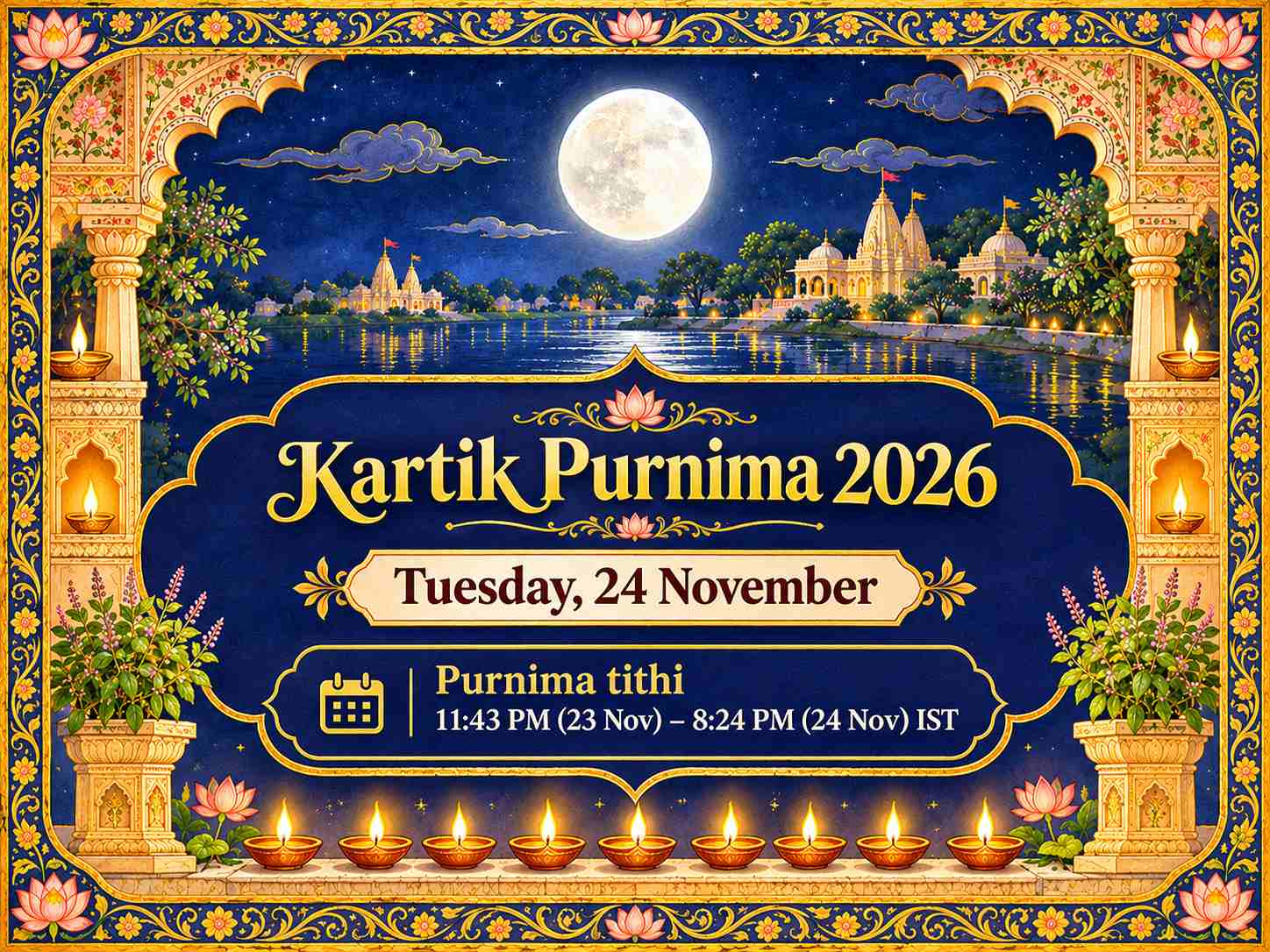
Kartik Purnima 2026 is on Tuesday, Nov 24. It is the last day of Damodar month and the day of Śrī Kṛṣṇa’s Rasayatra.
For thirty days, devotees have offered a lamp to Lord Dāmodara every evening. Kartik Purnima, the full moon that closes the month, is the day that offering is completed. It is also the day the Kartik vrata comes to an end.
This article gives the 2026 date and tithi, explains the significance of the day, and sets out a simple way to observe Kartik Purnima at home, with lamps, Tulasī and seva.
When Is Kartik Purnima 2026?
Kartik Purnima 2026 falls on Tuesday, Nov 24.
|
Tithi |
Begins |
Ends |
Day observed |
|---|---|---|---|
|
Kartik Purnima |
11:43 PM, Monday, Nov 23 |
8:24 PM, Tuesday, Nov 24 |
Tuesday, Nov 24 |
The Purnima tithi begins late on the night of Nov 23 and is present at sunrise only on Nov 24, so there is one date this year. Times are in IST.
What Is Kartik Purnima? The End of Damodar Month and Sri Krishna’s Rasayatra
The Last Day of Damodar Month
Kartik is the month devotees dedicate to Kṛṣṇa as Dāmodara, the child bound by His mother’s rope. Śrīla Prabhupāda explains why the month is so dear: “It is said that just as Lord Dāmodara is very dear to His devotees, so the month known as Dāmodara or Kārttika is also very dear to them” (The Nectar of Devotion, Chapter 12).
Kartik Purnima is the full moon that closes this month. Devotees who have kept the Kartik vrata, offering a lamp each evening and serving the Lord with extra care, complete it on this day.
The full story of Damodar month, including the pastime of Mother Yaśodā binding Kṛṣṇa, is told in our guide Kartik Maas 2026: Start Date, End Date and Significance.
Sri Krishna’s Rasayatra
In the Gauḍīya Vaiṣṇava calendar, Kartik Purnima is also observed as Śrī Kṛṣṇa’s Rasayatra, the festival of His rāsa-līlā with the gopīs of Vṛndāvana. Śrīla Prabhupāda narrates this pastime in the Krishna Book, Chapters 29 to 32.
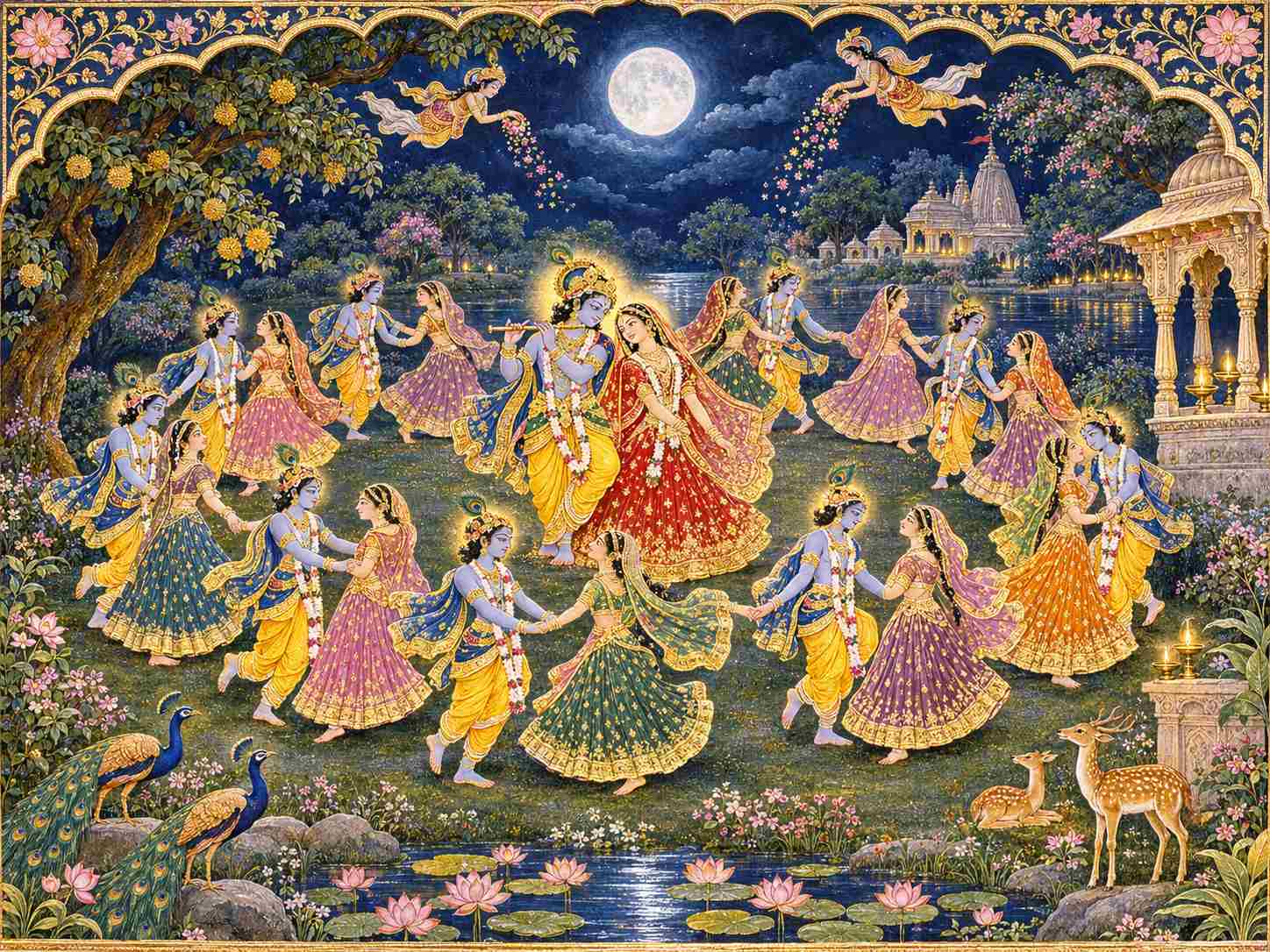
He makes clear that it is not an ordinary dance: “Kṛṣṇa’s rāsa dance should never be compared with any kind of material dance, such as a ball dance or a society dance.” The rāsa dance, he writes, “is a completely spiritual performance” (Krishna Book, Chapter 32). He explains that it takes place “on the platform of yogamāyā”, the Lord’s own internal energy, and that great Vaiṣṇavas “can understand the difference between love of Kṛṣṇa and lust” (Krishna Book, Chapter 29).
For this reason the pastime is heard with care, from the right source. Śrīla Prabhupāda writes that Śukadeva Gosvāmī “concludes this episode of rāsa-līlā by pointing out that if a person hears from the right source”, he “will be relieved from the most dangerous type of disease, namely lust” (Krishna Book, Chapter 32).
How to Observe Kartik Purnima: Lamps, Tulasi and Seva
Before You Begin: Kartik Purnima at a Glance
-
When: Tuesday, Nov 24
-
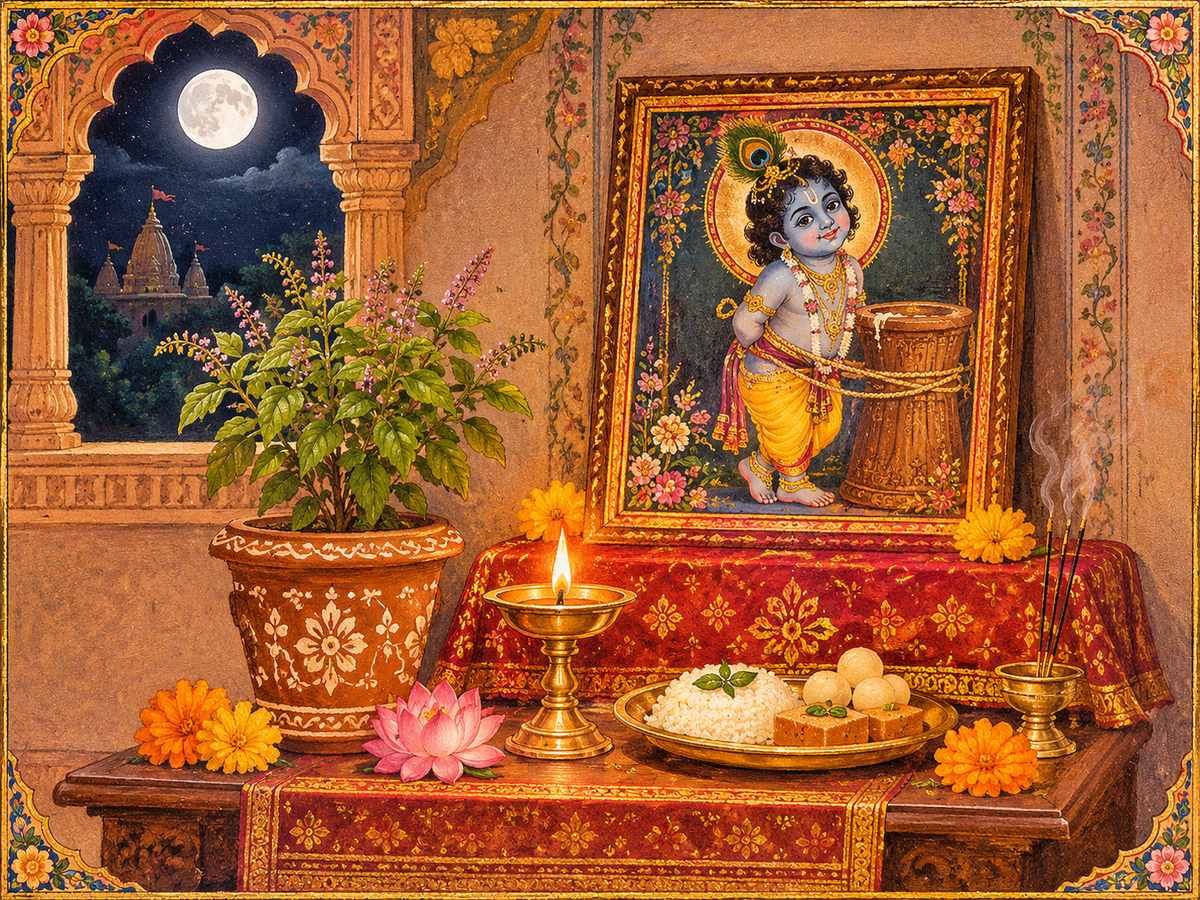
What you need: a picture or Deity of Śrī Kṛṣṇa (or of Lord Dāmodara), Tulasī, a ghee lamp, incense, flowers and a simple offering of food
-
How difficult is it: simple
-
Who can do it: anyone in the family, including children
Step 1: Prepare the Altar
Bathe, clean the altar and set up the Lord’s picture or Deity, with a Tulasī plant or fresh Tulasī leaves beside Him.
Offer obeisances to the spiritual master and the disciplic succession. Then chant the Pañca-tattva mantra once: śrī-kṛṣṇa-caitanya prabhu-nityānanda śrī-advaita gadādhara śrīvāsādi-gaura-bhakta-vṛnda. Śrīla Prabhupāda writes, “At the beginning of every function in preaching, especially before chanting the Hare Kṛṣṇa mahā-mantra… we must chant the Pañca-tattva’s names and offer our respects to them” (Cc. Ādi 8.4, purport).
Step 2: Offer Food with Tulasi
Cook a simple vegetarian offering, without onion or garlic, and do not taste it while cooking. Place a Tulasī leaf on each preparation. Tulasī leaves are “very dear to the Supreme Personality of Godhead” (SB 4.8.55); in Vaiṣṇava practice, food is not offered to Kṛṣṇa without them.
Step 3: Offer the Last Lamp of Kartik
In the evening, light a ghee lamp and offer it to Lord Dāmodara in slow circles, as on every evening of the month. While offering the lamp, you can sing the Damodarashtakam or play a recording of it. Then offer the lamp to Tulasī.
Step 4: Chant and Hear
Chant the Hare Kṛṣṇa mahā-mantra as a family:
hare Kṛṣṇa, hare Kṛṣṇa, Kṛṣṇa Kṛṣṇa, hare hare
hare rāma, hare rāma, rāma rāma, hare hare.
(Bhagavad-gītā As It Is, Introduction)
You may also read the Dāmodara-līlā from the Śrīmad-Bhāgavatam, Canto 10, Chapter 9 (SB 10.9).
Step 5: Complete the Vrata
If you took a personal vow for Kartik, such as extra rounds of chanting or giving up a favourite food, Kartik Purnima is the day it is completed. Offer your thanks to the Lord for the month. Many devotees also complete Kartik with an act of seva, such as offering a lamp in Vṛndāvana through the temple (see below).
The Vaishnava Ekadashi fast falls in this last week of Kartik, on Nov 21, and the last five days of the month, Nov 20 to Nov 24, are also known as Bhishma Panchak. Read more in our guide, Dev Uthani Ekadashi 2026: Date, Significance, Fasting Rules and Tulsi Vivah.
Regional Customs: Dev Deepawali, Ganga Snana and the Tripurasura Story
Kartik Purnima is observed in many ways across India. These are regional customs:
-
Dev Deepawali: In Varanasi, the ghats of the Gaṅgā are lit with lamps on the night of Kartik Purnima. The custom is known as Dev Deepawali.
-
Ganga snana: In many places, devotees bathe in the Gaṅgā or another sacred river at dawn on Kartik Purnima.
-
The Tripurasura story: In some traditions, Kartik Purnima is connected with Lord Śiva’s victory over Tripurāsura, the three flying cities of the demons, and the day is called Tripuri Purnima. The story itself is told in the Śrīmad-Bhāgavatam, where Nārada Muni explains that “Kṛṣṇa, the Supreme Personality of Godhead, saved Lord Śiva”, and that “Lord Śiva is known as Tripurāri, the annihilator of the three dwellings of the demons” (SB 7.10.51, SB 7.10.69). Its connection with Kartik Purnima comes from regional tradition.
Families who keep these customs follow their local custom. For devotees, the day’s worship is offered to Kṛṣṇa, with Tulasī.
Deepdaan Seva on Kartik Purnima at VCM
In The Nectar of Devotion, Śrīla Prabhupāda writes that devotional service in the month of Kartik “is especially recommended to be performed at Mathurā”, and that many devotees still go to Mathurā or Vṛndāvana to serve the Lord there during this month (The Nectar of Devotion, Chapter 12). Kartik Purnima, Nov 24, is the last day of the month.
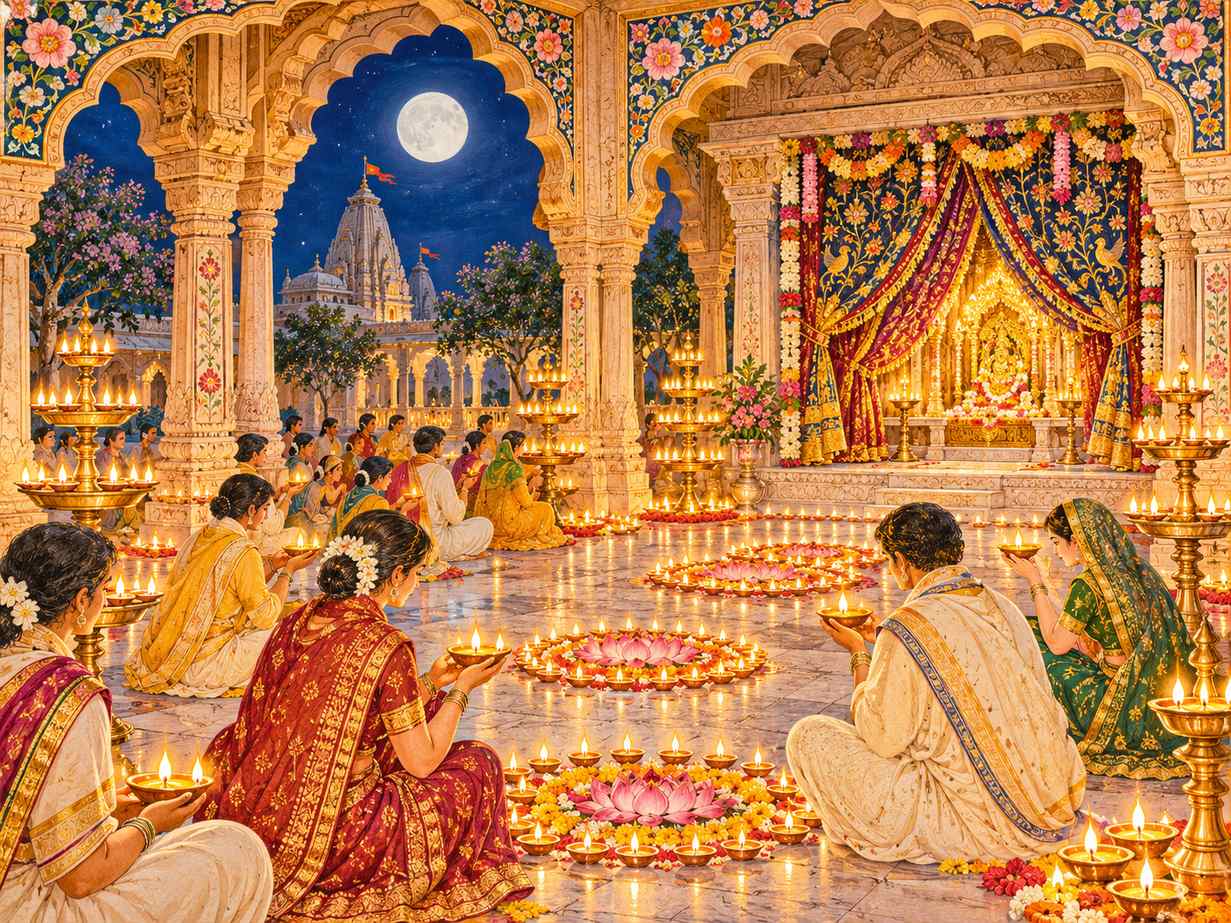
Devotees who cannot be in Vṛndāvana may offer the last lamp of Kartik through the temple:
-
Deepdaan Seva: a lamp offered to the Lord in Vṛndāvana this Kartik. Offer Deepdaan Seva
-
Pushpa Shringar & Sankalpa Seva: offer fresh flowers to adorn Sri Radha Vrindavan Chandra, with a sankalpa performed in your name. Offer Pushpa Shringar & Sankalpa Seva
-
Sampurna Seva: take part in all of our Kartik sevas with a single offering to Lord Dāmodara. Offer Sampurna Seva
Kartik Purnima 2026: FAQs
1. When is Kartik Purnima 2026?
Tuesday, Nov 24. The Purnima tithi begins at 11:43 PM on Nov 23 and ends at 8:24 PM on Nov 24, and it is present at sunrise only on Nov 24.
2. Is Kartik Purnima the same as Dev Deepawali?
They fall on the same day. Dev Deepawali is the name of the regional festival of lamps celebrated in Varanasi on Kartik Purnima. For devotees, Kartik Purnima is first of all the last day of Damodar month and the day of Śrī Kṛṣṇa’s Rasayatra.
3. Is Karthika Pournami the same day in South India?
Yes, this year it is. Karthika Pournami is the full moon of the lunar month of Kartik, which in 2026 falls on Nov 24 across India.
4. What is Rasayatra?
Rasayatra is the festival of Śrī Kṛṣṇa’s rāsa-līlā with the gopīs of Vṛndāvana. In the Gauḍīya Vaiṣṇava calendar it is observed on Kartik Purnima, the full moon that closes Damodar month. Śrīla Prabhupāda narrates the pastime in the Krishna Book, Chapters 29 to 32, and explains that “The rāsa dance is a completely spiritual performance” (Krishna Book, Chapter 32).
5. What should I offer on Kartik Purnima?
A ghee lamp to Lord Dāmodara, as on every evening of Kartik, and a simple vegetarian offering with a Tulasī leaf on each preparation. Tulasī leaves are “very dear to the Supreme Personality of Godhead” (SB 4.8.55).
6. Does the Kartik vrata end on Kartik Purnima?
Yes. Kartik Purnima is the last day of the month, so any vow taken for Kartik is completed on this day.
7. Can I offer lamps at home if I cannot visit a temple?
Yes. A clean altar, a picture of Kṛṣṇa, Tulasī and a small ghee lamp are enough. Offer the lamp in slow circles before the Lord, then to Tulasī.
Hare Krishna!